Nail Down Vs. Glue Down. Floating Hardwood Explained
Ask three flooring companies in Philadelphia which method of hardwood to be placed and you'll probably get three distinct answers -- not because they are incorrect, but rather because the proper method of installation is dependent on the particulars of your house. The subfloor type, floor level, the wood species, the moisture requirements and your long-term vision regarding the space all go into the decision. Most homeowners are only aware of this when they've already made the decision This is why it's important to learn about the different aspects prior to obtaining estimates. This article will explain how each method works and the times when each is appropriate.
1. Nail-Down Is the Traditional Standard for Solid Hardwood
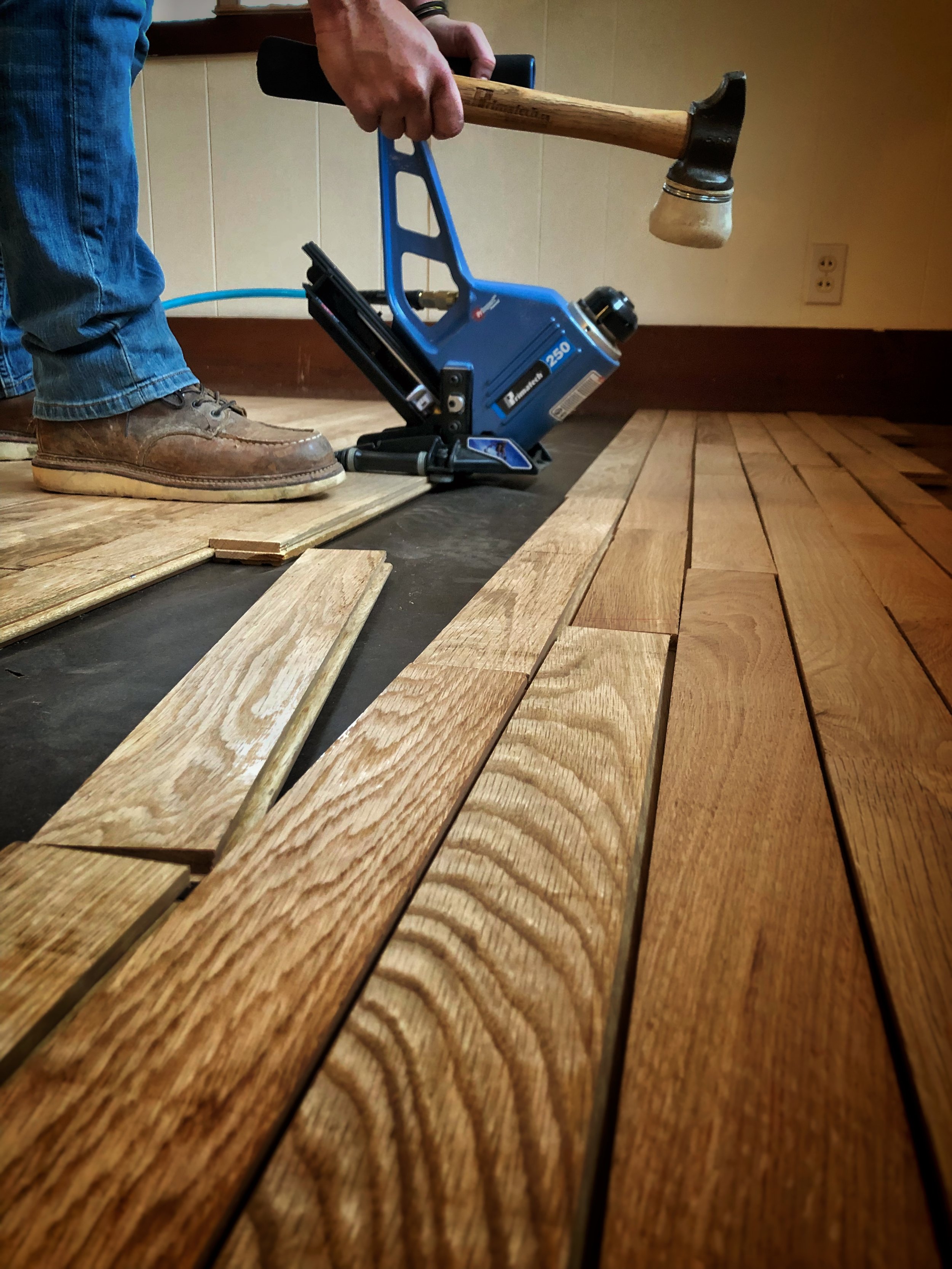
Nail-down, also called staple-down, involves mechanically fixing each plank to the wood subfloor with an pneumatic nailer. This is the oldest method of installation and remains the most commonly used method for installing solid hardwood in Philadelphia homes with either plywood or OSB subfloors. The connection is firm, the floor feels solid beneath your feet the floor, and there's a lack of adhesive to break over time. The majority flooring contractors will opt to nail-down for solid hardwood for subfloors with above-grade wood floors without a second thought.
2. The subfloor of your home determines if nail-down is even a possibility
Flooring that nail down wood requires a wood underfloor- full stop. Concrete slabs are common in basements and other ground floor zones of Philadelphia homes and Delaware County ranches, cannot take staples or nail nails in any way. If your subfloor is made of concrete, nail-down is off the table, regardless of the flooring material you want. A licensed flooring installer can notice this on the spot during a survey of the site. A novice person might not realize it until the project has begun.
3. The Glue-Down Method Opens Concrete Slab Installations
Glue-down hardwood installation is an adhesive with a full spread applied to the subfloor prior to planks being placed in. It's the best option when you need real hardwood over concrete -- basements in Montgomery County colonials, ground-floor slabs in the newer South Jersey construction, or any other place where nail-down may not be feasible. If it's done correctly and properly, a flooring is extremely sturdy with minimal flex. The drawback is that removing it in the future is far more laborious that removing a stapled and floating flooring.
4. The floating Hardwood Isn't Connected to the Subfloor at all
Floating installation implies that the planks lock at their edges. They then rest on top of the subfloor like one unit, moving as a whole instead of being fixed in place. It's much easier to install, more easy to remove, and more resilient to the imperfections of subfloors than nail-down. Engineered wood is the most commonly used type of floating flooring in Philadelphia as its layered structure is able to handle any slight movement that can occur with floating setup better than solid wood does.
5. Floating Floors Have a Distinct feel underfoot
This is something showroom visits do not always convey. Floating hardwood exhibits a slight touch when you walk on it. It's not a dramatic, but noticeable compared to nail-down floors that are locked straight to the subfloor. For most homeowners, it's issue that's not a problem. Some, in particular people who are replacing old nail-down hardwoods, there is an adjustment. If this is an issue for you, ask your flooring installer to walk you through an un-planted floor before taking the plunge.
6. Nail-Down Carries the Highest Labor Price of Three
From a strictly installation perspective nailing down hardwood requires the longest and is most skilled which can be seen in the labor costs you'll find from Philadelphia flooring contractors. The subfloor should be clean level, flat, and thick. The planks must be acclimatized. The nailer requires careful technique in order to avoid splitting. Flooring installers who nail-down successfully are earning themselves a salary. If you get a affordable hardwood installation price is worth asking how they're going to fix it.
7. It is expensive to make gluing but is a good way to save some labor Variables
Adhesive isn't cheap, for glue-down jobs, you need the correct product that is matched to the subfloor and hardwood combination. However, installing glue-down over a properly-prepared concrete slab will move more quickly than nail-down over subfloors that require substantial repair. Flooring contractors across Bucks County and Delaware County commonly recommend glue-down when installing engineered hardwood in slab-on-grade homes in particular because it provides real wood looks with practical advantages.
8. Moisture Testing Should Happen Before Any Method Is Chosen
This step gets skipped on budget jobs, and leads to issues within a year. Concrete slabs release vapors of water and excessive moisture can cause glue-down glue to fail, as floating floorings buckle. Wood floors in older Philadelphia rowhomes may be prone to excessive moisture from crawlspaces or inadequate ventilation. A moisture assessment prior to installation isn't optional -it's the way a reputable flooring contractor decides what method is safe, and what preparatory task is required prior to.
9. Refinishing Compatibility Is Different Depending on the Method
Nail-down solid wood can usually be sanded as well as refinished several times during its lifespanwhich is among the main arguments in favor of it despite the higher installation costs. Most engineered hardwoods that are glue-down can be refinished twice or once according to the thickness of the wear layer. Floating engineered flooring may contain a few refinishing possibilities. If long-term floor maintenance is part of your strategy, factor this into the method decision before installation, not after.
10. The Right Method Is A Site Choice, Not a Preference The Right Method is a Site Decision, Not a Preference
The homeowners who attend the flooring consultation with an concept of what type of installation they would like to use. Highly experienced flooring contractors in Philadelphia will gently redirect that conversation toward what the specific property actually requires. The most skilled flooring installers aren't using a specific methodthey're simply assessing your subfloor's moisture levels as well as your floor's level or the wood species that you've chosen and recommending accordingly. That site-specific judgment is exactly what separates a qualified professional from a person who has a nailer. View the recommended
licensed flooring installers Philadelphia for blog advice including laminate flooring installation Philadelphia PA, laminate flooring installation Philadelphia, flooring installation Philadelphia, hardwood floor installation South Jersey, licensed flooring installers Philadelphia, custom hardwood staining Philadelphia, ceramic tile flooring Philadelphia, subfloor repair Philadelphia, flooring contractors Philadelphia PA, engineered hardwood installation Philadelphia and more.

Serving Bucks, Montgomery & Delaware County The Bucks, Montgomery And Delaware County Service: What To Know
Homeowners in the Philadelphia suburbs typically assume that flooring contractors located in the city won't travel, they also believe that contractors from local municipalities are always the best choice to work within their respective areas. The truth is more nuanced. The best flooring installers serving the region are able to work seamlessly through Philadelphia, Bucks County, Montgomery County, Delaware County as well as into South Jersey because the demand across the metro is interconnected, and the housing stock is a good mix of similar characteristics that make regional knowledge truly valuable. What's distinct between these areas (housing types, subfloors, eras of construction and aesthetics in the neighborhood -- is worth understanding before you start pulling contractor names from the search results. Moreover, geography alone can be a reliable quality filter.
1. Each County Has Its Own dominant housing profile
Bucks County skews toward older townhouses in towns like Doylestown and Bristol as well as the more modern suburban developments further north. Montgomery County mixes mid-century colonials and ranches along with wealthy Main Line properties that have distinct plans for renovation. Delaware County has dense inner-ring suburbs with older rowhome-adjacent housing stock close to the city which then shifts to more sprawled residential properties as you go to the west. These distinctions affect flooring because the subfloor's condition, construction methods, and the moisture variations are significant by location and era of construction -anyone who is familiar with the region reads these patterns without needing them explained.
2. Subfloor conditions are significantly different across the States
Some older Delaware County homes close to the Philadelphia border (e.g. Darby, Upper Darby, Lansdowne and Lansdowne -- often share the same subfloors and issues with moisture prevalent in urban rowhomes. Bucks County properties further from city centers often have superior subfloor conditions in modern construction, but have more serious moisture issues in older buildings near that Delaware River. The Main Line homes can have original hardwood flooring on subfloors that haven't been retouched in 60 years. Flooring contractors who have worked across all three counties can recognize these patterns and charges accordingly, rather than getting surprised in the middle of the job.
3. Hardwood Flooring Expectations for the Future are high on the Main Line
The Montgomery County's Main Line corridor -- Bryn Mawr, Haverford, Wayne, Ardmore -- has a renovation culture where hardwood flooring quality expectations are specific. Residents in these areas typically seek wide plank white oak, custom staining matched to cabinetry and millwork as well as refinishing jobs that meet an extremely high aesthetic standard. Flooring companies that serve Montgomery County regularly understand that their standard for finish in these markets is much higher than that of a typical suburban renovation. They employ and furnish accordingly.
4. Bucks County's Construction Newer Creates Different Installation Conditions
Newer developments for residential construction within Bucks County -- particularly in Warminster, Horsham, and areas further north -- typically feature open-plan floor plans with larger areas, slab-ongrade construction in certain areas and subfloors cleaner than older County housing. LVP flooring is especially well-suited to these newer Bucks County homes: the large square footage benefits from LVP's low cost of construction, the open layouts make floating flooring a breeze and slab-grade floors are a great waterproof flooring important consideration in living areas.
5. Delaware County's Inner Suburbs share Philadelphia's flooring difficulties
Flooring contractors who understand Delaware County well will tell homeowners that homes in Upper Darby, Drexel Hill, and Havertown feature the same issues with subfloors as Philadelphia proper - board subfloors, moisture from aging foundations, and flooring that was last touched decades ago. Wood floor restoration for these locations is in constant need because the housing stock features original hardwood that's stood the test of time long enough for it to be worth saving, but it's been neglected long enough to look like it isn't. In order to make an accurate assessment, it's important for somebody who is able to tell the difference between a floor in need of refinishing and one that needs replacement.
6. South Jersey Serves as a Natural Extension that is part of Philadelphia Market
South Jersey -- Cherry Hill, Voorhees, Moorestown, Haddonfield and surrounding areas comprise the practical Philadelphia flooring market, even though it sits across the state line. Many flooring contractors in the Philadelphia area work in Pennsylvania along with New Jersey and service South Jersey frequently. Homeowners in South Jersey searching for flooring installers shouldn't restrict their search to New Jersey-only contractors -- the regional pool of experienced flooring professionals includes many Philadelphia-based and Pennsylvania-suburban companies who cross the river routinely.
7. Travel Fees and Service Area Policy may differ based on the specifics of your inquiry. in advance.
There are many flooring contractors in Philadelphia, but not every one has a presence in all three counties and not every company based in the county is able to cover the entire county. Some contractors apply travel surcharges to jobs extending beyond a certain distance from their base; others build it into their pricing without revealing it separately. When requesting flooring estimates across Bucks, Montgomery, or Delaware County, ask specifically how much the estimate will include travel or service area premium. A contractor who's honest about this upfront can manage the business relationship with professionalism. One who reveals it at the end of the contract talks isn't as good.
8. Permit Requirements Can Differ by the municipality.
Pennsylvania home improvement contractor registration applies statewide, but individual municipalities within Bucks, Montgomery, and Delaware County sometimes have their individual registration requirements, or permits for contractors who work within their boundaries. This isn't as prevalent when it comes to flooring than construction work, but you should confirm with your contractor that they're aware local laws in your township or Borough. Certified flooring installers who operate frequently across the region are aware of which municipalities have requirements and factor them into their design without being asked.
9. Regional Contractors Develop Networks That Benefit Customers
An experienced flooring company that has been working across Philadelphia and the surrounding counties for many years has relationships with suppliers network, subcontractor relationships, and professional referral relationships unlike a smaller or more narrowly local operator doesn't. This is crucial when a project uncovers issues with subfloors that require a carpenter, when a specific hardwood species needs an urgent source, or when the tile work requires an expert in waterproofing. The best flooring contractors in this region are the nodes of a professional network, not a single operator working on their own -- and their customers reap the benefits of that connectivity whenever unexpected events arise during the course of a project.
10. The most reliable regional contractor is the one who knows your home's style
County boundaries are less meaningful than the familiarity with housing types when it comes to flooring. Contractors who have completed fifty refinishing jobs for hardwood in the period prior to war Delaware County colonials knows things about those floors which a company that is working on new Bucks County construction does not -or in reverse. When evaluating flooring professionals throughout this region, you should ask specifically about their experience dealing with homes of your old-fashioned the kind of construction they work on, not just their general area of service. The answer to this question will provide more insight into which one is the right choice for your job than any maps of the areas they're willing to travel. Take a look at the most popular Read the recommended flooring installation cost Philadelphia for more advice including flooring estimate Philadelphia, engineered hardwood installation Philadelphia, subfloor repair Philadelphia, vinyl plank flooring Philadelphia PA, affordable flooring installation Philadelphia, nail down hardwood flooring Philadelphia, hardwood floor installation South Jersey, subfloor repair Philadelphia, LVP floor installation cost Philadelphia, LVP flooring installation Philadelphia and more.
Comments on “20 Handy Ways For Choosing Floor Installation”